“I’m going to make up a new language. Just words that express how I feel right now. Foremansville… Kaplotchk. Splelge….Spingleholt….Flangewick…”
– Gurney Slade
“I came back to Europe and decided that I needed to discover for myself a new form of musical language before I continued writing anymore…Low and “Heroes” aren’t so much situations but a process for discovery, searching for a new language, artistic language, so that I can go further.”
– David Bowie
David Bowie always took uncommon interest in his album covers – and, indeed, in other people’s; at the depths of his paranoid, cocaine-fuelled occult trip through mid-1970s Los Angeles, he grew convinced that the Rolling Stones were sending him messages through theirs. For his eleventh LP, he chose, not for the first time, to present the album as a science fiction movie. As with the preceding Station To Station, Low’s sleeve image, that enigmatic, burning orange world, comes drawn from a still from Nicolas Roeg’s The Man Who Fell To Earth. But here the association is even more explicit: this same heavily treated still had actually been used as the film’s poster in advertising across the USA in 1976.
Released in January 1977, the sci-fi movie of Low could have been titled Escape From LA. Bowie and his co-conspirator Brian Eno have cited the record as a continuation of Station To Station, and the echoes do persist – the things Bowie had been immersing himself in, black music and black magic, still cling to this music. But Low is far more a reaction against the creative and personal brink Bowie reached so magnificently with the previous album. Spooked by the prospect of becoming his label’s sure-thing megastar, and spooked by the forces he was glimpsing gathering around him in a period during which he described himself as “hallucinating 24 hours a day,” Low documents his flight – “running at the speed of life,” as he would sing an album later, quoting Low’s wordless opener – away from rock and back toward art, away from the witchy mansions of the Hollywood hills to the other-haunted bunkers of the European canon.
The mood here, though, is far from John Carpenter, and, while closer, neither is it particularly close to Nic Roeg. If Low is any sci-fi movie, it is Chris Marker’s La Jetée (1962). It comes in odd fragments, unconventional shapes. All these stunned, frozen moments, loaded with reference and memory: sadness for the future; mistrust of the past and old ways of doing things; anxious nostalgia for the present. At first, it seems chill, stark, remote. Eventually, it is revealed as enormously emotional.
And then you notice its weird, buried humour. After all, as well as mystery, the cover presents that amazingly corny “low profile” pun on Bowie’s retreat from view. The gag came late: the album’s title was changed so close to the last minute that initial cassettes went out still labelled with the original title, New Music Night And Day. The advertising slogan RCA dreamed up is another hangover: “Two sides of Bowie you’ve never heard before.”
The strapline reflected the horrified label’s utter perplexity at the album, but it’s still a perfect fit. Low comes out of nowhere. Literally. “Speed Of Life,” fades in alarmingly, and then is over almost before you realise that it is something entirely new in Bowie’s work: a song without singing. (The entire track is shorter than the long instrumental section that opened “Station To Station.”)
When the words do come, hot on the filthy heels of Carlos Alomar’s poisonous fuzz riff in “Breaking Glass,” they are blunter, shorter, stranger, more cut-up than anything Bowie had ever produced before.
A fragment of a song, “Breaking Glass” also opens the first in side one’s strange series of rooms within rooms. Here, it’s a dim chamber where occult rituals are shamefully practised (“Don’t look at the carpet/ I drew something awful on it,” Bowie sings amid the broken shards that are part of the recipe, conjuring jittery memories of his cracked 1974 appearance/ apparition on The Dick Cavett Show, scrawling out secret signs on the floor with his cane, casting after protection, or something else, or somewhere else. “What are you drawing?” Cavett asks, with mock mock-nervousness. “It’s therapeutic,” Bowie eventually sniffs as a non-answer answer.), and weird jokes crack: “You’re such a wonderful person/ But you’ve got problems.”
In the panicking, broken disco of “What In The World,” it’s a panic room where the little girl with grey eyes cowers from the gloom. Sliding down the thin synth strings into “Sound And Vision,” we enter the electric blue room that is Bowie’s ultimate retreat: a therapeutic cocoon, a place where the catatonic singer just wants lock himself away, do and say nothing, drift into solitude. Released as lead single, sounding quite like nothing before (or since), “Sound And Vision” is Low’s ideal summary: a perfect pop song that sounds like it was made by people struggling to remember, or perhaps trying to forget, what pop songs sound like. It contains another goofy gag: singing the backing “doo-doohs” with Mary Hopkins, Eno is credited as “Peter and Paul.”
It leads into a bigger internal space: the dim, neon-lit hotel garage of “Always Crashing In The Same Car,” where Bowie circles faster and faster in endless suicidal circles, inventing the whole Ballardian strain of post-punk in a hesitant, pulsing instant. From here it’s into the album’s most distraught and desperate moment, the epic anti-ballad “Be My Wife,” where at his most blankly neurotic, Bowie chooses to unexpectedly resurrect his old Anthony Newley Cockney croon and throws a rauccous barrelhouse piano into the alienated mix. In “Be My Wife” Bowie sees the world as being full only of places he has left. And so he leaves again, for “A New Career In A New Town.”
The influence of the German kosmiche wave on Bowie’s new music is probably more widely understood, and arguably overstated, today than it was in 1977. Due in part to Low’s feedbacking influence and the seductive myth of “The Berlin Trilogy” (launched by this record mostly conceived and executed in the French countryside), more people hearing “A New Career” now are likely to appreciate that the town in question is not Berlin so much as Düsseldorf – specifically, Neu man Klaus Dinger’s other band, La Düsseldorf, and particularly their 1976 single “Silver Cloud,” a likely blueprint. (Though Bowie and Eno would create a far more blatant krautrockalike later, with Lodger’s “Red Sails,” a dead ringer for Harmonia’s “Monza.”)
Just as they never quite had juke piano like “Be My Wife,” though, or the driving American R&B chassis supplied by Carlos Alomar, Dennis Davis and George Murray, the German motoriks never pulled out wailing, western harmonica such as Bowie plays here, with such passion that it’s not the electronic music’s spacey optimism that lingers, but that human yearning for what’s being left behind. (The feeling hit like a hammer when Bowie, calling back with everything that was left in him, pulled out that harmonica sound again 39 years later on “I Can’t Give Everything Away,” the final track of his final album, Blackstar.)
Producer Tony Visconti has recalled Bowie was having difficulty writing lyrics – both “Speed Of Life” and “A New Career,” were originally intended to have words – but what happens on Low goes beyond simple writer’s block. Low finds Bowie suspicious of and fighting against the modes, moves, methods and languages of rock and pop he’d built his career on. Fear Of Narrative is another plausible alternative album title.
“A major chief obstacle to the evolution of music has been the almost redundant narrative form,” Bowie wrote 16 years later, in the fascinating sleevenotes to his excellent Buddha Of Suburbia album, a record that saw him consciously re-engaging with some Low processes. “To rely upon this old war-horse can only continue the spiral into the British constraint of insularity. Maybe we could finally relegate the straightforward narrative to the past.”
Yet, on Low, the denial of narrative itself becomes the narrative. On Side One of this Burroughsian sci-fi movie, the traumatised hero finds that language fails him, words fragment and break down into meaninglessness, then silence. On Side Two, muted attempts begin at creating a new language to more faithfully express emotion: inventing new words, on “Warszawa” (the Dada method Eno would revisit with Talking Heads on Fear Of Music’s “I Zimbra”); using familiar words in obscure ways on the closing “Subterraneans”: “share bride failing star care line care line…”
On Side Two – the famous “instrumental side” that isn’t simply instrumental at all – as Bowie leaves his rooms and ventures out into those new towns, any optimism is replaced by a charged sense of doubt. Marked by Eno’s ambience and the influence of minimalist composers like Steve Reich and Philip Glass, the songs are a series of textural sketches of Europe’s Iron Curtain cities rusting after the rain: landscape washes as refracted through Bowie’s troubled and uncertain interior landscapes.
Co-written with Eno, “Warszawa” is based on the singer’s memories of the mood he felt in Warsaw during a brief train stop-over in 1976. “Art Decade” presents another of Low’s odd puns, calling up images of deco splendours beginning to rot, cultural palaces falling into decay and dereliction, while invoking the pastoral mood of German experimentalists like Harmonia. The chiming “Weeping Wall,” with Bowie wailing the opening melody from “Scarborough Fair,” conjures both Jerusalem’s ancient Wailing Wall and the new Wall scarring the city that Europe’s Jews were forced out of.
Finally, the album’s longest and most moving moment, “Subterraneans,” is Bowie’s imaginary, ruminative portrait of East Berlin, of the hipsters lost behind the wall remembering what used to be, as represented by his gorgeous, half-caught saxophone.
Perhaps the best measure of Low is that, no matter how much we come to know it, and know about it, its mystery remains fully intact. Fittingly, for the record that launched Bowie’s collaboration with Eno, who brought his interests in process art along with his briefcase synthesizer, the key players have discussed how the album came to be made in great, even technical detail.
We know today, for example, something many musicians drove themselves crazy trying to puzzle out in the late-1970s and early 1980s: exactly how producer Tony Visconti created the extraordinary whomping drum sound that’s a key signature of the album’s first side. (By treating Dennis Davis’s snare via his newly acquired Eventide Harmonzier, the pitch –shifting device Visconti pitched to Bowie this way: “It fucks with the fabric of time.”) And that Eno came up with “Warszawa”’s theme by copying the random notes Visconti’s four-year-old son Delaney plucked out on the studio piano one quiet afternoon.
At the same time as all this transparency, however, Low’s opaque mystique is preserved. The memories conflict and contradict. The exact relationship between Low and The Idiot, the masterpiece Bowie made with Iggy Pop just before Low, which laid out the pulsing, looped, minimal groundwork for his own new sound, remains unclear. Some participants recall that tracks initially recorded for The Idiot turned up later on Low, while Iggy can be found hollering on “What In The World.” When Low was reissued in 1991, it came augmented with two supposed outtakes: the unresolved proto-industrial throb “All Saints” and the breathtakingly exquisite, elusive and wintry “Some Are.” Visconti, however, says he can’t recall those songs from the Low sessions at all. On the other hand, he has said there are “dozens” of unheard Low songs, hours of tape.
Hazy, too, is to what extent the unused, unheard Man Who Fell To Earth soundtrack Bowie recorded in December 1975 was recycled for Low. Bowie has said only “the backwards bass” on “Subterraneans” is a hangover, yet Eno has stated “Weeping Wall” also originated from the soundtrack. Visconti recalls that some of the short, fragmentary songs, including “Always Crashing In The same Car,” originally had more verses.
No matter how much comes to light about Low, however, it stubbornly remains far more than the sum of its parts. It leads directly, of course, to Bowie’s next album, but at the same time it stands apart from anything else he has ever done. As “Subterraneans” fades out, the only place really left to go is back to the fade-in that launches “Speed of Life.” That’s Low. 38 minutes that can last forever.
A shorter version of this piece was published in David Bowie: The Ultimate Music Guide
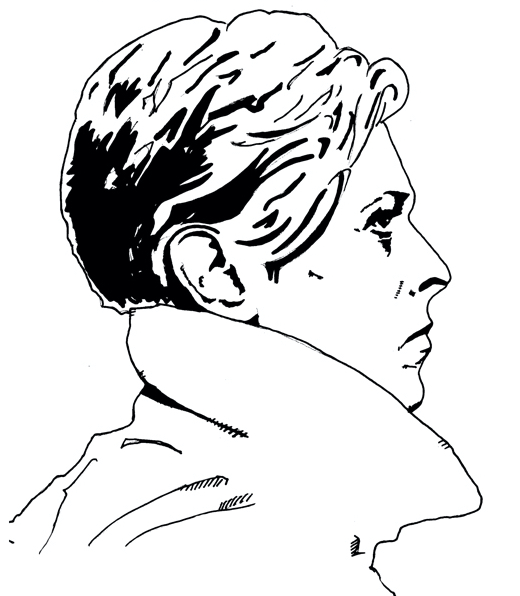
Illustration: Damien Love
 Damien Love